


Introduction: The Evolution of Traditional Specs
In an era where technology changes overnight, this Smartphone Buying Guide 2026 is designed to cut through the marketing hype and help you identify the technical benchmarks that actually determine how a phone will perform over the next four to five years.
For over a decade, we bought smartphones based on three simple numbers: Gigahertz, Gigabytes, and Megapixels. But as we move through 2026, those numbers have evolved beyond their traditional meaning. A 200MP camera can still take mediocre photos, and 12GB of RAM is useless if the software isn’t optimized for modern workflows.
Today, in this age of artificial intelligence, a smartphone is no longer just a smart device; it has become a pocket-sized personal AI assistant. As people’s needs change over time, phone manufacturers are also providing new technologies to meet those needs.
This transformation requires a new way of thinking. So let’s look at the new parameters we should consider when evaluating a phone in 2026.
The AI Processor: Does Your Phone Have a “Brain”?
In 2026, the most important component in your phone is not the CPU (Central Processing Unit); it is the NPU (Neural Processing Unit).

When following a Smartphone Buying Guide 2026, your first question should be: “How much of this phone’s AI happens on the device?”
Why “On-Device AI” Matters?
Earlier AI features relied on the cloud, sending your data to a server and back. This was slow and raised privacy concerns. The 2026 standard is On-Device Generative AI.
This allows your phone to:
Live Translate: Conduct a phone call with someone speaking a different language with zero lag.
Generative Editing: Remove unwanted people from photos or expand a landscape instantly without an internet connection.
Semantic Search: Ask your phone, “Find the screenshot of the blue dress I saved three months ago,” and have it find it in milliseconds.
The Processor: Choosing a “Smart Brain”
In 2026, the processor (chipset) is the most important part of your phone. It is no longer just about speed; it is about having a “brain” powerful enough to handle modern AI tasks like instant photo editing and live language translation.
For Android-Based Devices:
When exploring the vast world of Android phones, pay attention to the chip brand. To ensure your phone doesn’t become slow by next year, aim for:
High-End Performance: Look for the Snapdragon 8 Series or MediaTek Dimensity 9 series.
The Key Feature: Ensure the chip supports “On-Device AI.” This allows the phone to process smart tasks locally, making it faster and more private.
For Apple Devices:
Apple designs its own chips (A-Series) specifically for the iPhone. Because their software and hardware are built together, the performance is very efficient.
The Standard: When buying an iPhone, the best strategy is to choose the most recent model available.
Why it matters: Apple’s newest features, especially their latest AI tools, are designed to run only on their most recent chips. Choosing the latest version ensures your phone stays compatible with new updates for several years.
The Bottom Line: Don’t just buy for RAM. Ask, “Is this processor built for 2026 AI apps?” If the answer is yes, your phone will remain fast and relevant until 2030.
Display Science: Protecting Eyes and Battery
We spend an average of 6 to 7 hours a day looking at our screens. In 2026, “OLED” is no longer enough of a description.
For a truly future-proof device, your 2026 checklist must prioritize these two display technologies:
3000+ Nits Peak Brightness:
High-end and even mid-range screens in 2026 are hitting incredible brightness levels. This isn’t just a vanity stat; it’s about Outdoor Visibility. If your phone’s peak brightness is under 2000 nits, you will struggle to read text or take photos in direct sunlight.
With a peak brightness of over 3000 Nits, you can comfortably use your phone anywhere.
However, if you are on a budget, look for phones with anti-reflective coatings or use a matte screen protector to maintain clarity even at lower brightness levels.
Display: Smart Tech for Battery and Eye Health
In 2026, a great screen is about more than just colors. You should look for two essential features that affect your daily life:
Adaptive Speed (LTPO Tech):
Older screens run at full speed all the time, which drains your battery. Modern LTPO screens are smarter—they slow down automatically when you are just looking at a photo or reading text.
The Benefit:
It saves a massive amount of power, making your battery last much longer every day.
Eye Comfort (PWM Dimming):
Have you ever had a headache or tired eyes after using your phone at night? This is often caused by an invisible screen “flickering.”
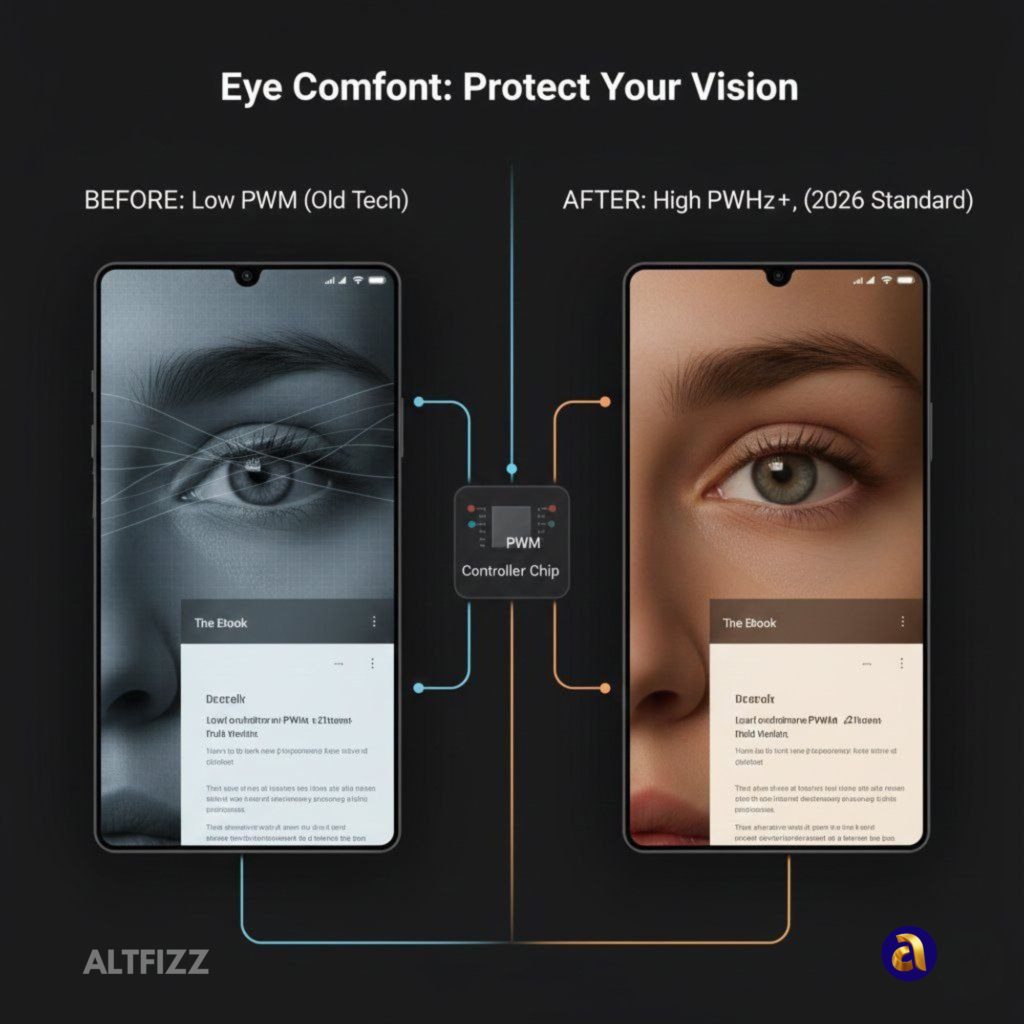
Look for phones with High-Frequency PWM Dimming (2160Hz or higher).
It stops the flickering, meaning no more eye strain or headaches, even during late-night use.
The “New” Basics Summary
When buying a phone in 2026, don’t just look at the size. A modern screen must be:
- Bright enough for the sun.
- Smart enough to save your battery.
- Safe enough to protect your eyes.
Summary of the “New” Basics
| Old Metric (2023-24) | New 2026 Benchmark |
|---|---|
| RAM Size (GB) | RAM Speed (LPDDR5X or 6) |
| Megapixels (108/200MP) | Sensor Size & AI Processing |
| Simple Fast Charging | Battery Health & Bypass Charging |
| 2-Year OS Updates | 5 to 7 Year OS Support |
The Battery Revolution: Silicon-Carbon is Here
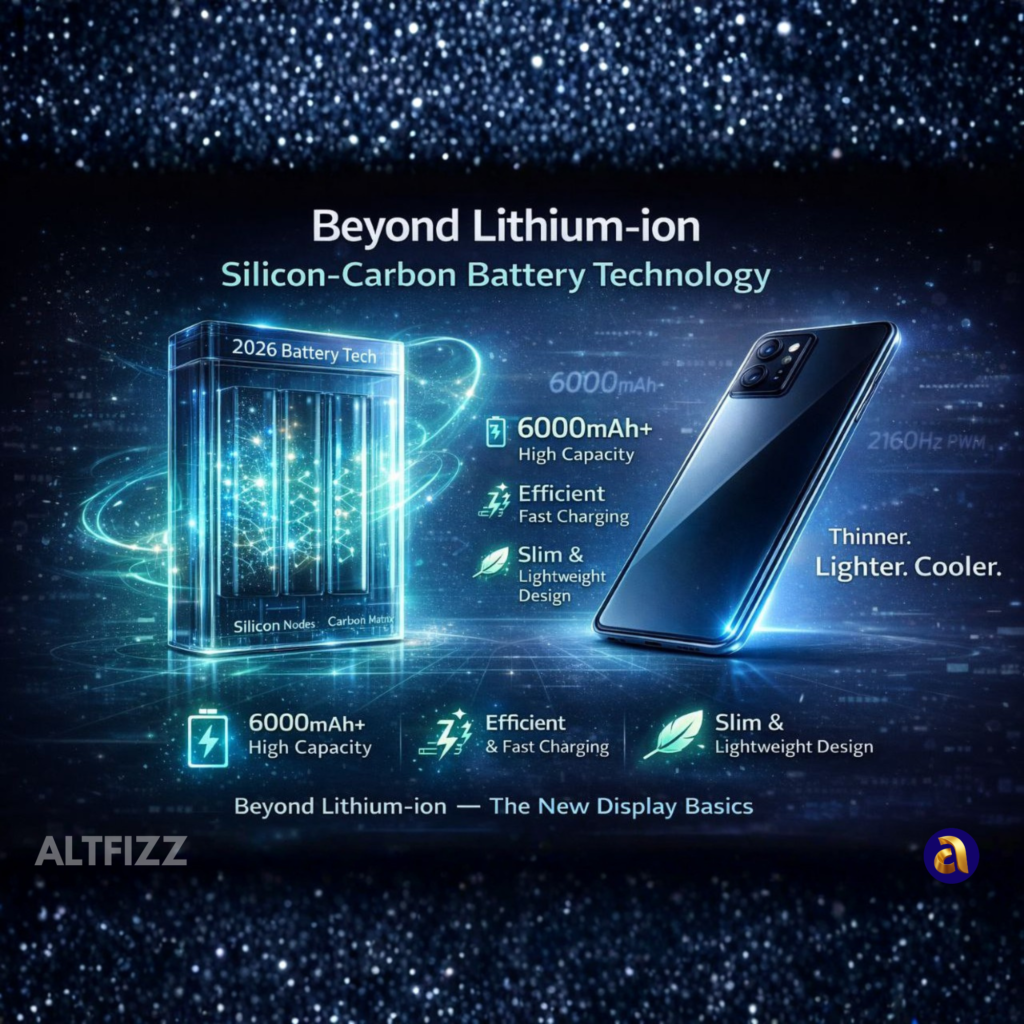
For nearly two decades, Lithium-ion was the undisputed king. But in 2026, the Silicon-Carbon (Si-C) battery will become the gold standard for high-end and mid-range devices. When following a Smartphone Buying Guide 2026, you must look beyond just the “mAh” number.
Battery: Technology Over Numbers
In 2026, don’t just buy a phone because it has a high mAh number. A bigger battery often meant a heavy, bulky phone in the past. Now, the technology inside matters more.
The New Standard: Look for Silicon-Carbon Battery technology.
The Benefit: These batteries are much more efficient than the old “Lithium-ion” types. They allow your phone to be thinner and lighter, yet they pack more power (6,000mAh+) and stay cool even during heavy use.
Bypass Charging: This is a crucial feature for gamers and power users. It allows the phone to draw power directly from the charger without passing it through the battery. This prevents the device from overheating and dramatically extends the battery’s lifespan.
Battery Life: How Many Years Will It Last?
In the past, phone batteries would start dying after just 2 years. In 2026, the technology has doubled the life of your device.
The Old Standard (800 Cycles):
Most older phones were designed for 800 charge cycles. If you charged your phone every day, the battery would start failing in about 2 years.
The New 2026 Standard (1,600 Cycles):
Modern high-quality phones now guarantee 1,600 cycles. This means even if you charge your phone every single day, the battery will remain healthy for over 4 years.
What to look for: When buying, don’t just ask about “fast charging.” Ask: “Does this battery offer 1,600 charge cycles?” This ensures your phone stays at peak performance for twice as long as older models, saving you from expensive battery replacements.
Camera Engineering: Physics Over Pixels
If there is one thing this Smartphone Buying Guide 2026 wants you to remember, it is this: Stop counting Megapixels. A 200MP sensor with a tiny lens will always be inferior to a 50MP sensor with a large physical size.
The 1-Inch Sensor Standard:
High-quality mobile photography in 2026 is driven by Sensor Size. Larger sensors capture more light, providing natural “bokeh” (background blur) and noise-free night shots. Look for sensors from the Sony LYTIA or Samsung ISOCELL HP series that emphasize light intake over pixel count.
Optical vs. Digital Zoom:
Do not be misled by “100x Space Zoom.” That is mostly software-generated “mush.” Instead, check for Periscope Optical Zoom.
In 2026, a “good” phone should offer at least 3x to 5x true optical zoom to be considered versatile.
The Video Revolution (10-bit HDR):
With the rise of high-quality social content, 2026 phones must support 10-bit Log recording. This allows you to capture billions of colors rather than millions, giving your videos a cinematic, professional look that survives heavy editing.
Quick Checklist: Is the Camera Actually Good?
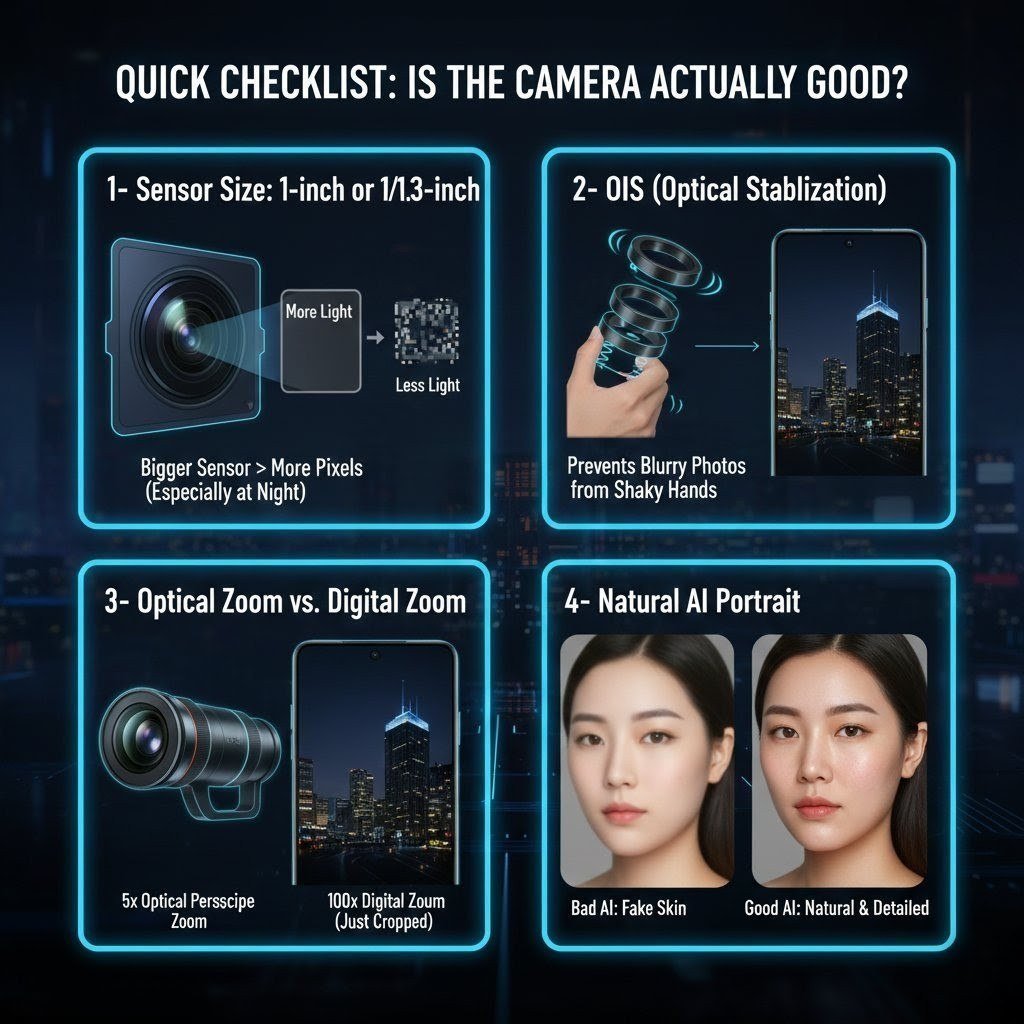
Instead of chasing Megapixels, look for these 4 things:
1- Sensor Size: Look for a 1-inch or 1/1.3-inch sensor. A bigger sensor beats more pixels every time, especially at night.
2- OIS (Optical Stabilization): Ensure the main lens has OIS. It prevents blurry photos caused by shaky hands.
3- Optical Zoom: Look for “Optical” or “Periscope” zoom. Avoid “Digital Zoom”—it’s just a fancy word for cropping a blurry photo.
4- Natural AI: Take a portrait shot. If the skin looks like a flat painting, the AI is bad. A good camera preserves natural skin texture.
Repairability Score: Can Your Phone Be Easily Fixed?
When buying a phone, we rarely think about what happens if the screen cracks or the battery fails. In 2026, the Repairability Score became a vital benchmark. This score tells you how easy—or difficult—it is to open a device and replace its parts.
Why Does This Matter in 2026?
Globally, and now increasingly in India, “Right to Repair” laws are changing the industry. Manufacturers are now often required to provide a rating (usually from 1 to 10) that indicates the device’s repair-friendliness.
What You Should Look For:
Availability of Parts: Does the brand guarantee that genuine batteries and screens will be available for the next 5 years?
Tool Accessibility: Can the phone be repaired using standard tools, or does it require expensive, proprietary equipment that only the manufacturer owns?
Software Freedom: A high score means the manufacturer doesn’t “lock” features (like the camera or FaceID) if you choose to get a repair from a trusted local technician instead of an expensive authorized center.
Pro Tip: If your chosen phone has a low repairability score, consider buying an extended warranty or insurance. A low-score phone is often so difficult to fix that the repair cost can equal half the price of a new device.
Durability & Sustainability: Built to Last
The most “pro-consumer” trend in 2026 is the shift toward longevity. A phone is now a 5-year investment, and its physical build must reflect that.
IP69 Protection: While IP68 (waterproofing) was the old standard, IP69 is the 2026 benchmark. This means the phone is protected even against high-pressure, high-temperature water jets—making it truly “accident-proof.”
IP68 vs. IP69: What’s the Difference?
In 2026, the standard for protection has moved from “Water-Resistant” to “Accident-Proof.” Here is why IP69 is the new king:
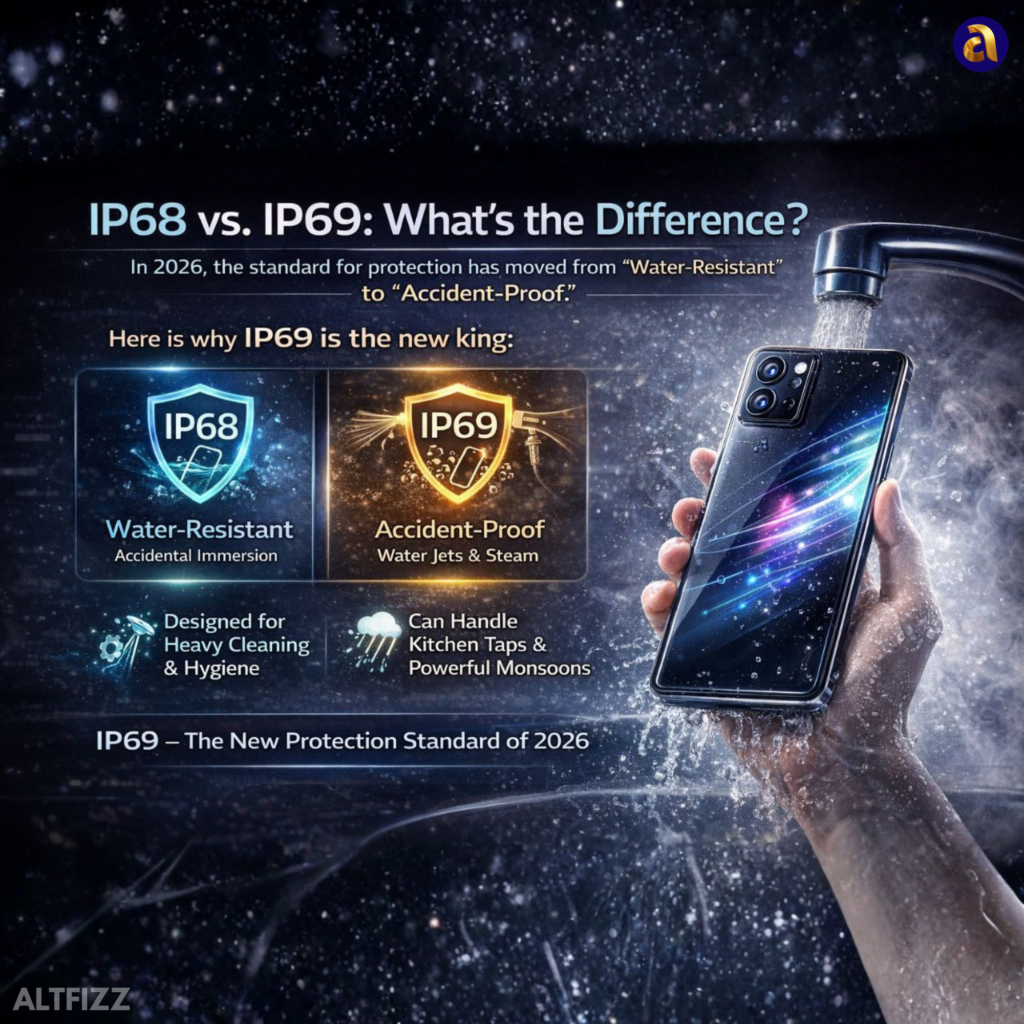
IP68 is for accidental immersion in water, while IP69 is for protection against water jets and steam.
IP69 is designed for industrial and hygiene-focused environments where heavy cleaning is required.
In 2026, this means you can wash your phone under a kitchen tap or use it in a heavy monsoon without worry.”
Sustainable Materials: The global audience is moving toward eco-conscious buying. Premium phones in 2026 often feature Recycled Aluminum or Bio-based polymers that are as durable as plastic but better for the planet.
Summary Checklist for Cameras & Power
| Feature | Avoid This | Look For This (2026 Benchmark) |
|---|---|---|
| Battery | Standard Li-ion (5000mAh) | Silicon-Carbon (6000mAh+) |
| Charging | High Wattage Only | Bypass Charging Support |
| Main Camera | High MP Small Sensor | Large Sensor (1/1.3″ or 1″) |
| Zoom | Digital Zoom Only | 5x Optical Periscope Zoom |
Software Lifecycle: The “5-Year Rule.”
In the past, people replaced their phones every two years. In 2026, due to rising hardware costs and powerful processors, the average user keeps their phone for 4 to 5 years. This makes software support the most critical part of any Smartphone Buying Guide 2026.
The 7-Year Club:
Brands like Google and Samsung have set the gold standard by promising 7 years of OS and security updates for their flagship and even some upper mid-range models. If a brand offers less than 4 years of support, the phone is essentially “dead on arrival” for long-term use.
Security Patches vs. OS Updates: Don’t Fall for the “Security Update” Trap
Many brands promise “5 years of updates,” but if you look closely, they often mean only Security Patches, not actual Android/iOS version upgrades.
Why it matters:
New AI features and smart tools are tied to the OS version. If your phone is stuck on an old Android version, it won’t be able to run the latest AI advancements, even if the hardware is powerful.
The “4+5” Rule: Ensure your next device guarantees at least 4 years of major OS upgrades and 5 years of security patches.
Companies leading this trend:
Fortunately, getting long-term support is now easier than ever:
Samsung & Google: They now offer an incredible 7 years of OS updates on their flagship and even some mid-range (A-series/Pixel ‘a’ series) models.
Xiaomi, OnePlus, and Oppo: Most of their 2026 mid-range devices now come with a solid 4-year OS upgrade guarantee to keep your phone future-proof.
Global Connectivity: Future-Proofing for a Satellite World
Connectivity in 2026 has moved beyond just 5G. Your phone is now a survival tool.
Satellite SOS & Messaging:
As of 2026, Satellite Connectivity is no longer just for hikers. Leading devices from Apple, Google, and Samsung now allow you to send emergency texts or share your location via satellite when you are out of cell range. In 2026, this is a must-have safety benchmark for anyone who travels.
WiFi 7 Ready:
With home internet speeds hitting new peaks, ensure your phone supports WiFi 7. It offers 4x the speed of WiFi 6 and significantly lower latency for cloud gaming and VR.
The iSIM Revolution:
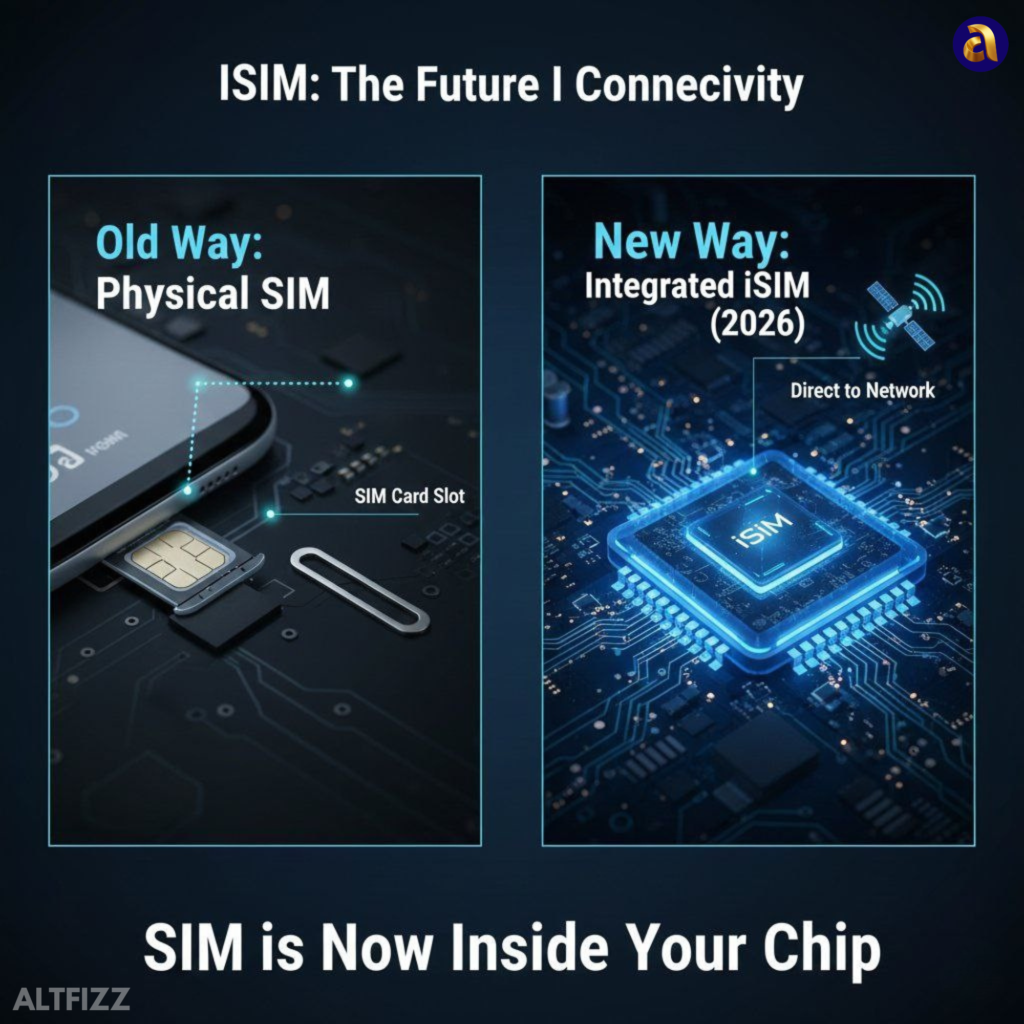
Physical SIM cards are disappearing. 2026 phones are moving toward iSIM (Integrated SIM), which is built directly into the processor. This saves space for a larger battery and makes switching carriers globally as easy as scanning a QR code.
If you are buying a new device this year, check if it’s ‘iSIM Ready’—it’s the hallmark of a truly modern, future-proof phone.
2026 Smartphone Buying Checklist (Quick Reference)
✅ 2026 Smartphone Buying Checklist (Quick Reference)- 🚀 Processor: Choose 3nm or 4nm chips for top speed with zero heating issues.
- 📱 Display: Demand 3000+ Nits brightness and High-Frequency PWM to protect your eyes.
- 🔋 Battery: Look for Silicon-Carbon technology and a guarantee of 1,600 charge cycles.
- 📸 Camera: Prioritize Sensor Size (1-inch) and OIS over high Megapixel numbers.
- 🔧 Repairability: Check for a 7/10 Repair Score to ensure cheap and easy future fixes.
- 🛡️ Durability: Ensure an IP69 Rating for total protection against high-pressure water.
- 🔄 Software: Stick to the ‘4+5’ Rule (4 years of OS updates) to keep getting new AI features.
- 🌐 Connectivity: Look for iSIM (Integrated SIM) for better network and a slimmer design.
Conclusion: Purpose Over Hype
The era of buying a phone just for a “faster processor” is over. In 2026, the best smartphone is the one that fits your life-whether that means a camera that understands lighting like a professional (AI), a battery that doesn’t age (Si-C), or a screen that protects your eyes (High PWM).
By following this Smartphone Buying Guide 2026, you are not just buying a gadget; you are investing in a tool that will stay fast, secure, and relevant until 2030 and beyond. Choose purpose over hype, and physics over pixels.
