


Have you ever wondered why your thumb keeps moving even when your eyes are burning?
To understand this habit, we must look into the psychology of endless scrolling, a system designed to keep us hooked.
- It’s not just a habit. There’s a whole system behind it.
- We have all been there.
- Your eyes feel tired. Your mind feels heavy.
- You know you should stop scrolling, yet your thumb keeps moving.
We often blame ourselves:
“Maybe I lack self-control.”
But the truth is deeper than that.
This is not just a personal habit.
It is the result of a carefully designed digital system.
Social media does not just entertain you — it holds you
Platforms like Facebook and Instagram do not want you to simply visit.
They want you to stay.
Because the longer you stay:
- The more ads you see,
- The more data you generate,
- The more money the platform earns.
Former Google design ethicist Tristan Harris once said:
“Social media apps are designed to hijack your attention.”
So the real product is not the app.
The real product is your attention.
Algorithms: The Invisible Eyes Monitoring Your Behaviour
It is a silent system that monitors your behavior every single second.
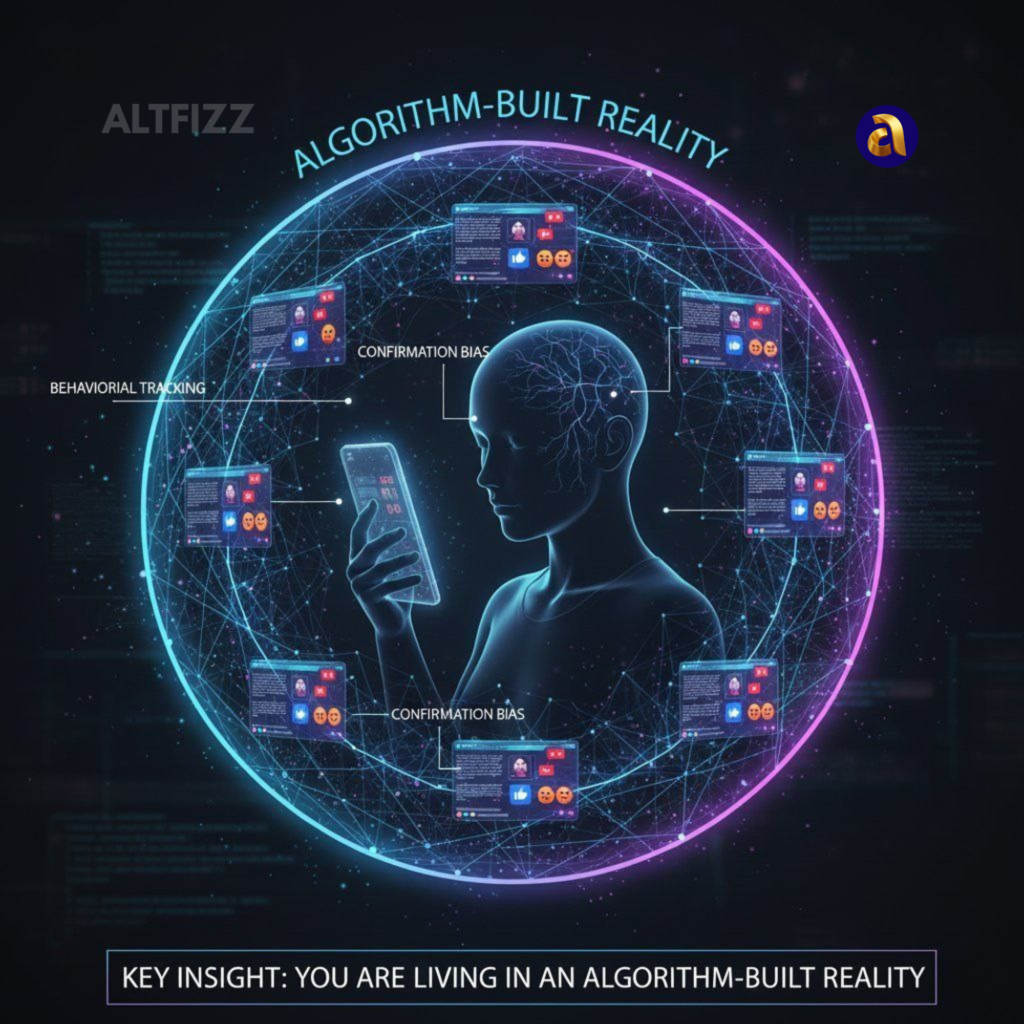
They monitor your behavior in the following ways
- What we pause on
- What we like
- What we share
- What makes us angry or emotional
Then they give us more of the same, not because it is good for us,
But because it keeps us engaged.
Slowly, we begin to feel:
“This content understands me.”
But the truth is:
You are not living in your own digital world.
You are living in an algorithm-built reality
Behavioral Tracking:
It doesn’t just track your ‘Likes.’ It notes exactly how many seconds you paused on a photo, which videos you re-watched, and even what you chose to ignore.
The Echo Chamber:
The system is designed to show you more of what you already believe or what triggers an emotional response. Slowly, you are pulled into a digital bubble where your existing biases are constantly reinforced.
The Engagement Trap:
You might open an app for a 5-minute break, but the algorithm’s “intelligent feeding” ensures you stay for 50 minutes by serving you one “perfect” post after another.
Key Insight:
You are not living in your own digital world; you are living in an algorithm-built reality designed to keep you scrolling at any cost.
The Reaction Economy: Why Platforms Love Your Outrage
Have you noticed how easy it is to:
- get angry in comments,
- argue with strangers,
- Share something without thinking?
That is not accidental.
Platforms prefer reactive users because:
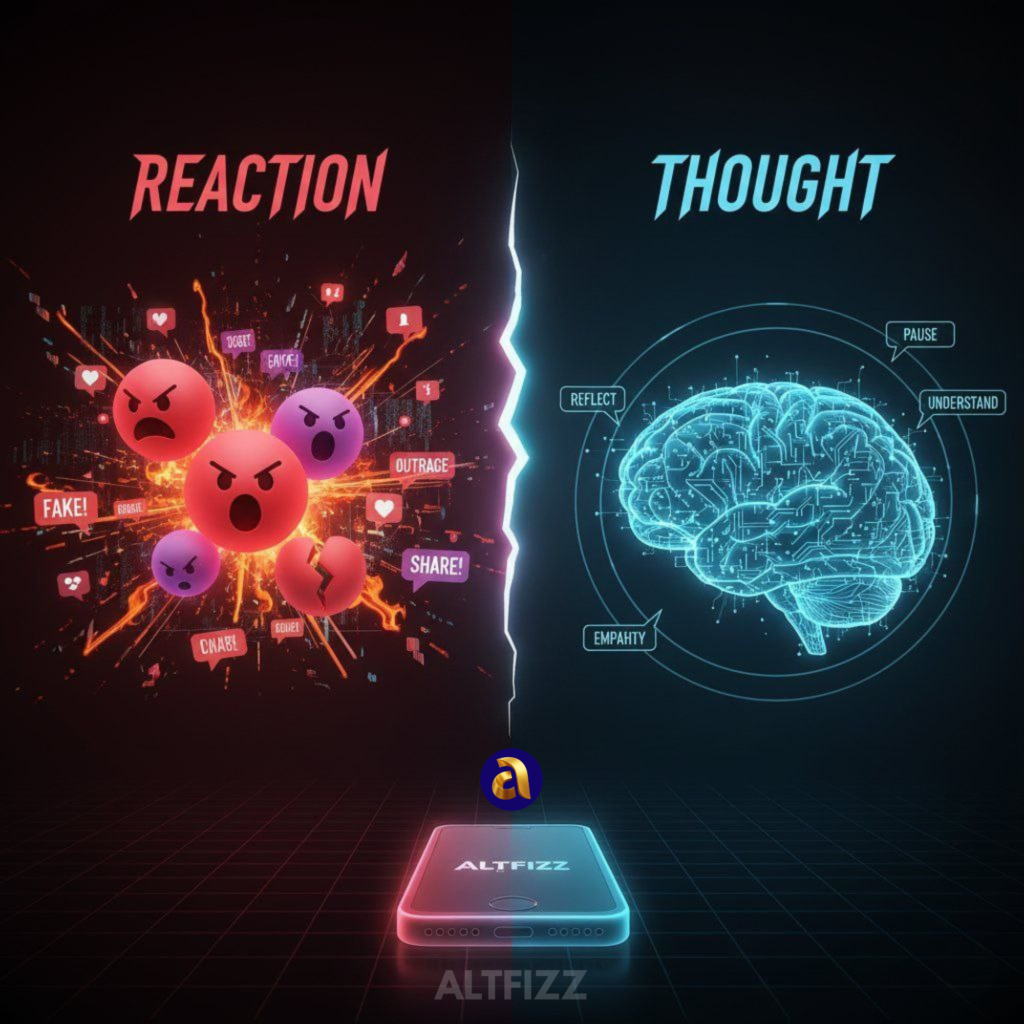
reaction = engagement and engagement = business.
Platforms are specifically designed to prioritize content that triggers an immediate, emotional reaction.
Reaction = Engagement:
A thoughtful comment takes time to write, but an angry “react” or a quick share takes a split second. To an algorithm, anger, fear, and excitement are high-value fuels that keep the machine running.
The Conflict Loop:
Platforms often boost controversial posts because they spark arguments.
More arguments mean more notifications, more clicks, and more time spent on the app.
The Cost of Speed:
When we are in a “reactive” state, our brain’s logical center (the prefrontal cortex) shuts down, and our emotional center takes over. This makes us easier to manipulate and harder to disengage.
Key Insight:
As former Facebook executive Chamath Palihapitiya admitted, these tools are “ripping apart the social fabric” because they reward our most impulsive, reactive selves rather than our thoughtful ones.
Cognitive Rewiring: How Constant Scrolling Slowly Reshapes Your Brain
Endless scrolling isn’t just limited to staying connected on social media; it actually changes the way your brain works.
The “quick-hit” nature of social media trains your brain to react instantly rather than engage in deep thinking.
Long-term social media exposure quietly reshapes the mind:
- Our patience decreases.
- Our attention span shortens.
- We start reacting faster than thinking.
- We judge quicker than we understand.
The Shrinking Attention Span:
When we consume 15-second videos for hours, our brains lose the “muscle memory” required for deep reading or long conversations. We become addicted to the next “hit” of information.
The Death of Critical Thinking:
In a world of “Surveillance Capitalism,” as Harvard scholar Shoshana Zuboff calls it, we are trained to react faster than we think. We judge a headline in seconds without ever clicking the link to understand the context.
Proactive vs. Reactive:
Constant scrolling shifts us from being Proactive Thinkers (who decide what to think about) to Reactive Responders (who only react to what the screen puts in front of them).
Key Insight: In the digital age, we are constantly distracted by things that demand our immediate reaction, causing us to lose our ability to concentrate.
Read Also
Living with AI in 2026: From Smart Assistants to Our Hidden Boss
The Fatigue Paradox: Why We Scroll Until We’re Numb
Here is the strange truth:
Social media both creates stress and offers escape from that stress.
- We feel bored → we scroll.
- We feel lonely → we scroll.
- We feel anxious → we scroll.
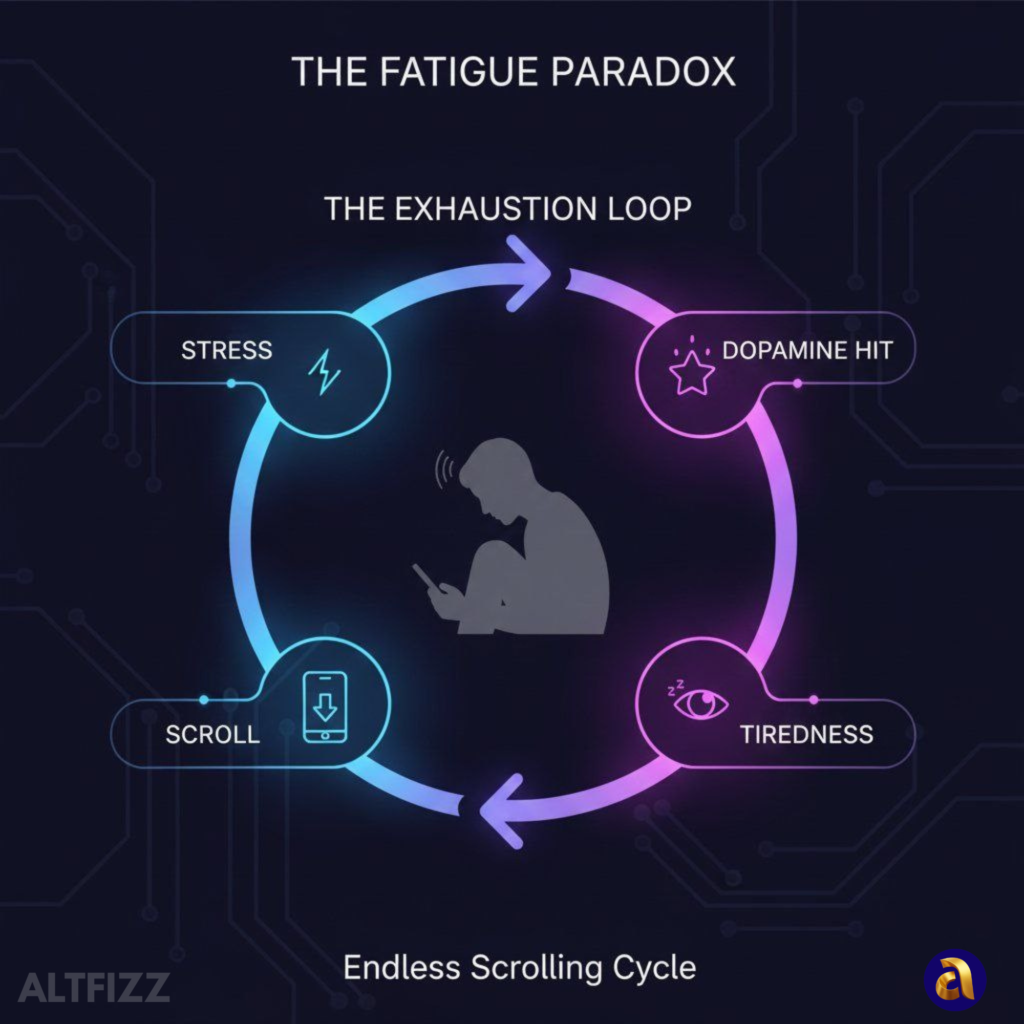
And the loop begins:
Tired → scroll → more tired → scroll again.
It’s a strange cycle:
We feel exhausted, yet we can’t stop. This happens because social media acts as both the stress-creator and the fake escape from that stress.
The Dopamine Loop:
Even when tired, your brain hunts for one last “rewarding” post. The “Infinite Scroll” ensures that the reward is always one swipe away, preventing your brain from reaching a stopping point.
Decision Fatigue:
When you are tired, your willpower is low. It actually takes more mental energy to decide to put the phone down than it does to keep mindlessly scrolling.
The Stress Trap:
We scroll to escape anxiety, but the content we see often makes us more anxious, leading to a loop of “Tired → Scroll → More Tired.”
Key Insight: You aren’t staying online because you’re enjoying it; you’re staying because your brain is too exhausted to make the conscious decision to stop.
Are we helpless? No, But we must become conscious.
- The solution is not to quit social media.
- The solution is to use it with awareness.
- A simple habit can change everything.
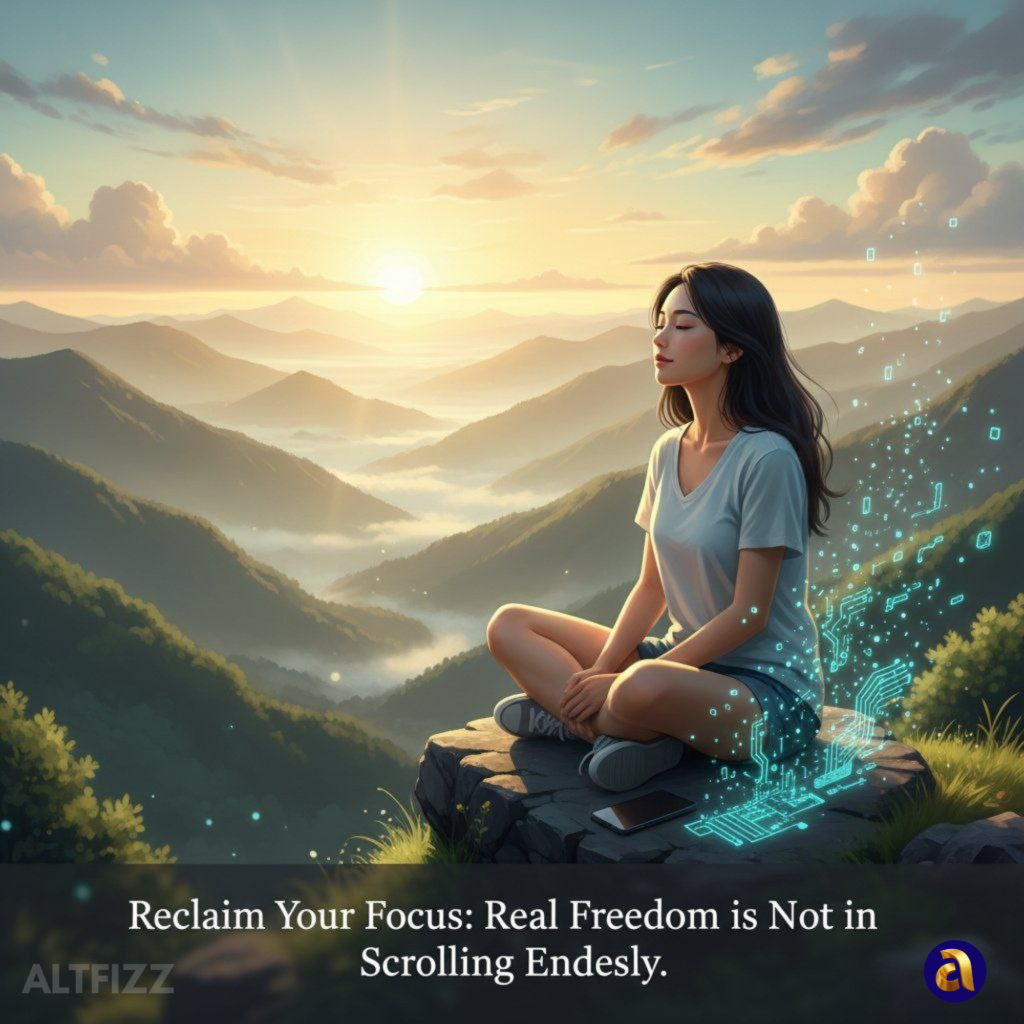
Next time you feel tired but still scrolling, ask yourself:
“Am I really enjoying this –
Or am I just reacting?”
That single question turns you
from a passive user into a decision-maker again.
Final thought
Social media does not make us bad people.
But if we are not careful, it slowly turns us from thinking humans into reacting humans.
And in today’s world, real freedom is not in scrolling endlessly. But in thinking consciously.
AltFizz Recommends
If social media is a part of your daily life, try making a few small changes that can make a big difference:
Pause before reacting. Ask yourself if you’re responding impulsively or thoughtfully. Cultivate the habit of controlling your urge to react immediately.
Make sure to have some screen-free moments every day.
Avoid endless scrolling – don’t let your memory become a dumping ground for useless information.
Follow fewer accounts, but follow good ones.
Most importantly, remember – your attention is valuable. Use it wisely. 😊
